
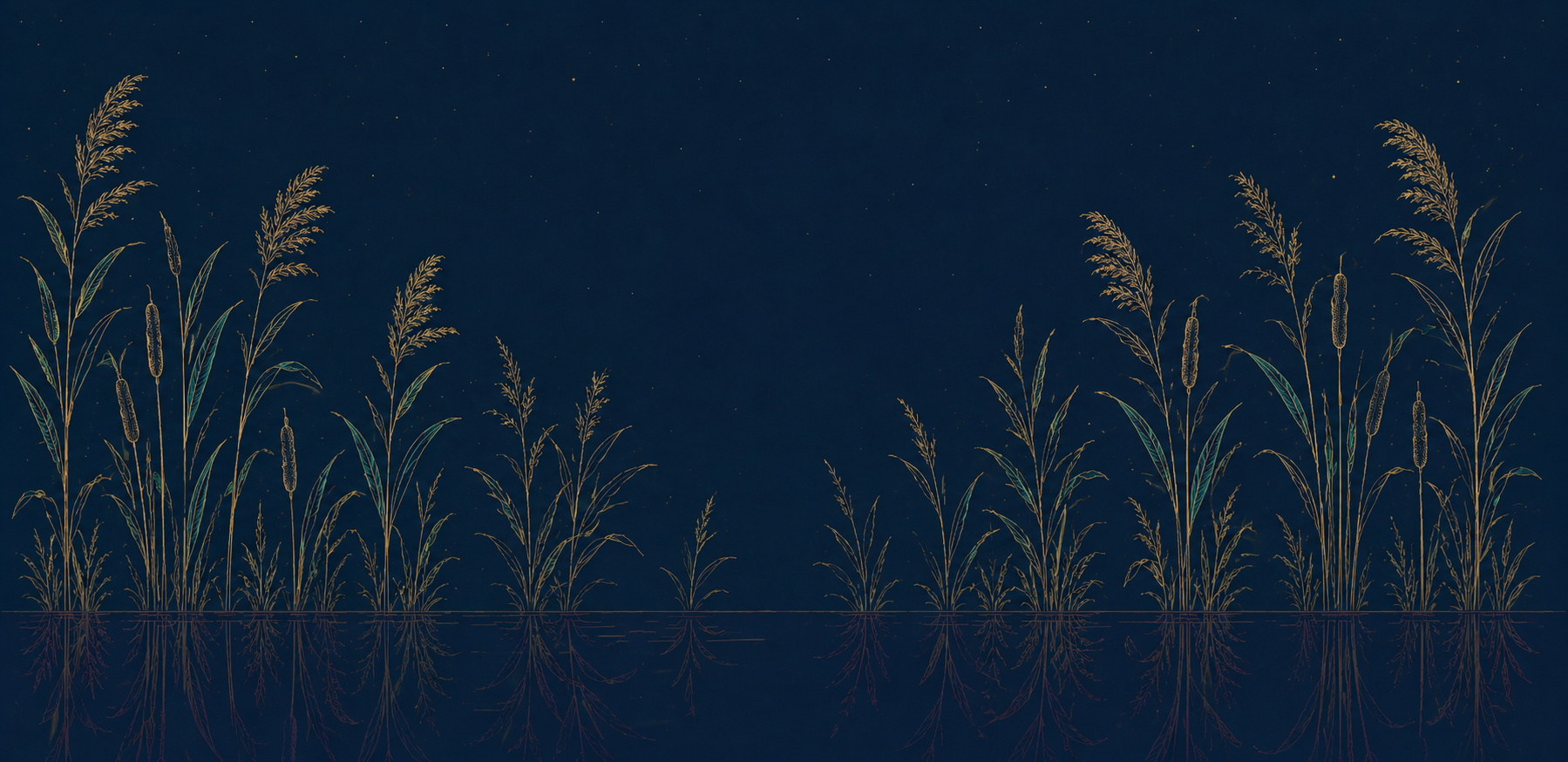
Listen to the reed: why Rumi begins the Masnavi with a wound.
Before doctrine, before instruction, the Masnavi opens with a sound — the reed flute crying for the bed it was cut from.
There is a reason the greatest poem in the Farsi language does not begin with an argument. Rumi opens the Masnavi-ye Ma’navi — six volumes, some twenty-five thousand couplets — with an instruction so simple it is almost a whisper: listen.
And what he asks us to listen to is not a teacher or a prophet, but a reed. A hollow stalk cut from the marsh, bored through, turned into a flute. When a player breathes into it, the sound that comes out is, to Rumi, not music but complaint — the reed crying for the reed-bed it was torn from.
Listen to the reed, how it tells a tale, complaining of separations. — Rumi, Masnavi
The reed is us
Rumi’s image works because it is also an argument about the soul. The reed sings because it has been separated from its source. We are the reed: cut from where we began, and the ache we carry is the sound of that severance.
From a sound to a house
A culture that is loved but never written down lives at the mercy of memory. The reed taught us the feeling; the Canon is our answer to it — the long, patient work of gathering the philosophy, the poetry, the music and manners of a thousand years, and keeping them where they cannot be lost again.